Prism Bender: Tips, Strategy & How to Get a High Score
Master Prism Bender: Tips, Strategy & High Score Secrets
This page provides a comprehensive guide to mastering Prism Bender, a fast-paced reflex game where you manipulate light beams to power crystals. The most important takeaway is that success depends on anticipating the beam’s path rather than reacting to it; staying ahead of the movement allows you to navigate obstacles and hit targets with precision.
How do I play Prism Bender?
Prism Bender challenges your reflexes and spatial awareness in a high-intensity environment. You control the flow of light, guiding beams through a series of shifting prisms while avoiding “Shadows” that can break your streak. The core loop involves charging crystals to gain points while maintaining a continuous beam path. It is not just about speed; it is about understanding the geometry of the level.
As you progress, the game introduces more complex layouts where beams must reflect off multiple surfaces before reaching their destination. Every time you hit a prism or a goal, the intensity increases, requiring quicker reactions and more precise movements as the obstacles become more frequent. You aren’t just moving a cursor; you are managing a trajectory. If your beam hits a Shadow zone even once, your streak breaks instantly. To succeed, you must visualize the path of the light several bounces ahead rather than focusing only on the next immediate prism.
What are the best Prism Bender tips for high scores?
To climb the leaderboard, you must transition from reactive play to proactive strategy. The game rewards players who can maintain a “flow state” where the movement feels rhythmic rather than frantic. Use these specific tactics to improve your score:
- Focus on the “Path of Least Resistance”: Don’t always aim for the nearest crystal if it forces you into a narrow corridor filled with shadows. Sometimes taking a slightly longer route that keeps the beam clear is safer for maintaining a long streak. A high-scoring run is built on consistency, not risky shortcuts.
- Master the Reflex Timing: The game rewards consistent movement. Instead of making jerky movements, try to find a steady rhythm. If you can predict where the next prism will bounce the beam, you can position your inputs early. This “pre-loading” of your actions prevents the panic that leads to mistakes in high-speed sections.
- Zone Awareness: Divide the screen into quadrants mentally. Knowing exactly where the “Shadow” zones are allows you to make split-second decisions when the beam begins to flicker or change direction rapidly. If a shadow appears on the left, your instinct should be to steer toward the right quadrant immediately.
- Prioritize Continuity: A broken beam usually ends your streak. In Prism Bender, a continuous flow is more valuable than individual points from scattered crystals. Think of the crystals as bonuses and the beam’s path as your lifeline; keep the light moving at all costs.
Which controls should I use for better accuracy?
Since Prism Bender is a reflex-based game, your input method significantly impacts your ability to “bend” the light accurately. Precision is paramount when the speed ramps up in later levels.
| Feature | Strategy | Impact on Score |
|---|---|---|
| Timing | Tap/Click just before the beam hits a prism | High (Prevents accidental misses) |
| Pathing | Plan 2-3 “bounces” ahead | Medium (Reduces panic moments) |
| Shadow Avoidance | Keep the beam center-aligned | High (Prevents instant game over) |
How can I master the Beam and avoid the Shadows?
Mastering the mechanics requires a combination of muscle memory and environmental awareness. The “Shadows” are not just obstacles; they are indicators of where your path is becoming too erratic. Follow these four steps to refine your gameplay:
- Identify the “Safe Zones”: During your first few rounds, ignore the crystals and focus solely on keeping the beam active while navigating through shadow-heavy areas. This builds a foundation of safety before you start chasing high scores.
- Practice the “Double Bend”: Practice hitting two prisms in rapid succession. This builds the muscle memory needed for high-speed sections where the distance between targets shrinks significantly.
- Listen to the Rhythm: Many players find that the visual cues of the game sync with a rhythmic pace. Tapping to the “beat” of the level progression can help you anticipate transitions and keep your movements fluid.
- Analyze your Failures: When a shadow catches your beam, look at exactly where it happened. Was it a lack of speed or a lapse in concentration? If you consistently fail at the same junction, it means you need to adjust your “pre-loading” timing for that specific turn.
Can I play Prism Bender on mobile?
Yes, the game is designed for instant play, making it accessible across various devices. However, because it is a reflex-based title, the precision of your touch screen matters immensely. On a mobile device, the “hitbox” for the beam can feel smaller due to the lack of tactile feedback from a mouse or keyboard.
To succeed on mobile, you must ensure you have a clear workspace and a stable grip. Any slight shake in your hand can cause the beam to drift into a Shadow zone during high-intensity segments. We recommend focusing on “centered” movements—keeping your thumb movement as direct as possible rather than sweeping across the screen. This minimizes the margin of error when navigating tight corridors between obstacles.
Related guides
Play the game
All games →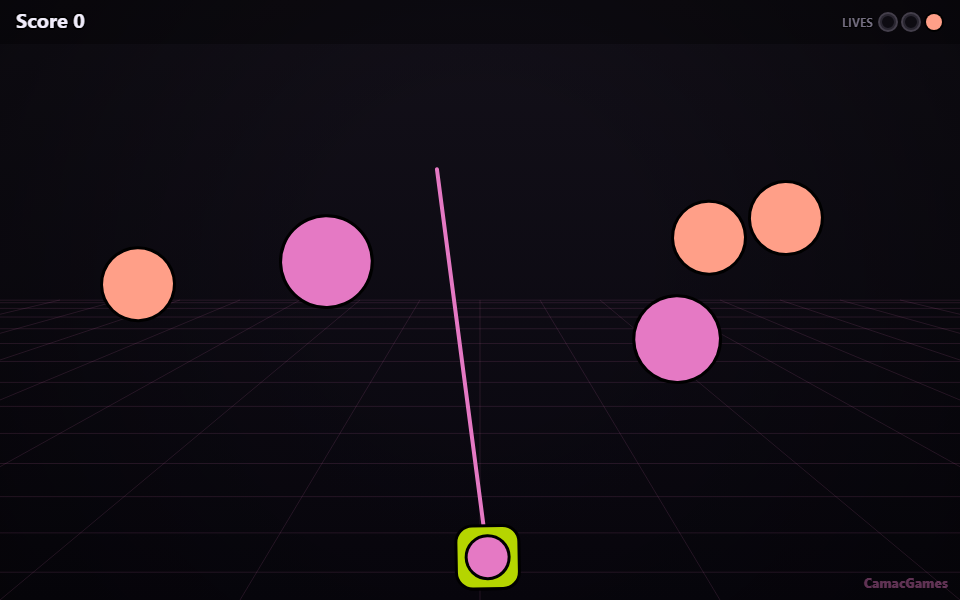
FAQ
How can I get a higher score in Prism Bender?
To achieve a high score, focus on maintaining your combo streak and clearing as many prisms as possible in a single move.
What is the best strategy for complex levels?
Focus on identifying the primary light paths first and eliminating obstacles that block the main beam's trajectory.
Do I need to download the game to play?
No download is required; you can play Prism Bender for free directly in your web browser.