Lantern Moth: Tips, Strategy & How to Get a High Score
Master Lantern Moth: Pro Tips & High Score Strategies
This page provides a comprehensive guide to mastering Lantern-Moth, an arcade-style flight game where precision and timing are paramount. The most important takeaway for high scores is maintaining a consistent altitude while minimizing unnecessary wing flaps; every extra movement consumes energy, so efficiency is the key to soaring further toward your goal.
What is Lantern-Moth actually like to play?
Lantern-Moth captures the ethereal feeling of nocturnal flight through a minimalist aesthetic and atmospheric soundscape. Unlike standard arcade flyers that rely on rapid-fire button mashing or complex multi-key inputs, this game demands a rhythmic, deliberate approach. You control a moth navigating through an environment where you must balance height against your dwindling energy reserves to reach the moon.
The gameplay loop is less about raw speed and more about “grace.” Because every flap consumes a portion of your total stamina, erratic movements will drain your resources before you can clear the mid-game obstacles. The goal is to find a flow state where your flight path becomes smooth and predictable. Instead of reacting impulsively to every visual cue, successful players anticipate the layout, choosing paths that allow for long periods of gliding without needing to intervene.
How do I control my movement?
The controls in Lantern-Moth are designed for simplicity but require high precision to master. Players typically use a single key or button (such as Spacebar or a mouse click) to flap their wings.
- Single Tap: Provides a small, controlled burst of lift. This is the standard method for maintaining altitude during steady climbs.
- Rapid Tapping: Allows for quick ascent but drains your energy bar rapidly. This should only be used when you are falling too fast or need to clear a sudden vertical barrier.
- Gliding: By not flapping, you maintain your current momentum while slowly losing altitude.
Mastering the “glide” is what separates casual players from high scorers. You want to flap just enough to stay above the danger zone, letting gravity do most of the work during the long stretches between obstacles. Think of it as a conservation game; every unnecessary tap is a point lost on your potential distance.
How can I get a higher score?
To push your personal best, you must treat the game like a resource management puzzle rather than a simple reflex test. To maximize your score, focus on these three strategic pillars:
- The “Minimum Effort” Rule: Only flap when your altitude begins to drop into a danger zone. If you are safely in the middle of the screen, stay still. Staying in the center allows you more time to react if an obstacle appears unexpectedly.
- Predictive Pathing: Look ahead at the layout. If a gap is wide, don’t just react to the nearest obstacle; plan a trajectory that keeps you centered in the safe zone for as long as possible. This prevents “panic flapping” when things get tight.
- Momentum Management: Larger jumps in height give you more “air time,” but they can also cause your moth to drift further horizontally or vertically than intended. Aim for controlled, medium-height arcs rather than massive vertical leaps.
Which tactics work best for beginners?
If you are just starting out, focus on consistency over speed. Many new players try to fly as fast as possible, which leads to frantic flapping and exhausted energy levels within seconds. Instead, find a steady rhythm by establishing a “safe zone” in your mind—usually the middle third of the screen.
| Strategy Type | Best For | Key Technique |
|---|---|---|
| Steady Ascent | Beginners | Flap every 3-4 seconds to maintain height. |
| Precision Glide | Intermediate | Only flap when the bottom of the screen is threatened. |
| High Score Push | Advanced | Minimize flapping; use only one burst to clear large gaps. |
What are the best tips for mastering the game?
If you want to dominate the leaderboard, incorporate these specific tactics into your next session:
- Identify “Safe Zones”: Some areas of the map offer wider clearances or less frequent obstacles. Save your energy here so you have a buffer when the environment becomes more dense and difficult.
- Watch the Energy Bar: Keep a constant eye on your resources. If it drops below 50%, switch to a “conservative” flight mode immediately, where you only flap if your altitude drops significantly.
- Master the Timing: A well-timed flap just before an obstacle can propel you into a safer lane, whereas a late flap might leave you stuck in a collision zone or cause you to hit the ceiling of the play area.
- Practice Consistency: The goal is to create a “flow.” When you stop thinking about the button and start feeling the rhythm of the moth’s wings, your score will naturally climb because your movements become economical rather than reactive.
Related guides
Play the game
All games →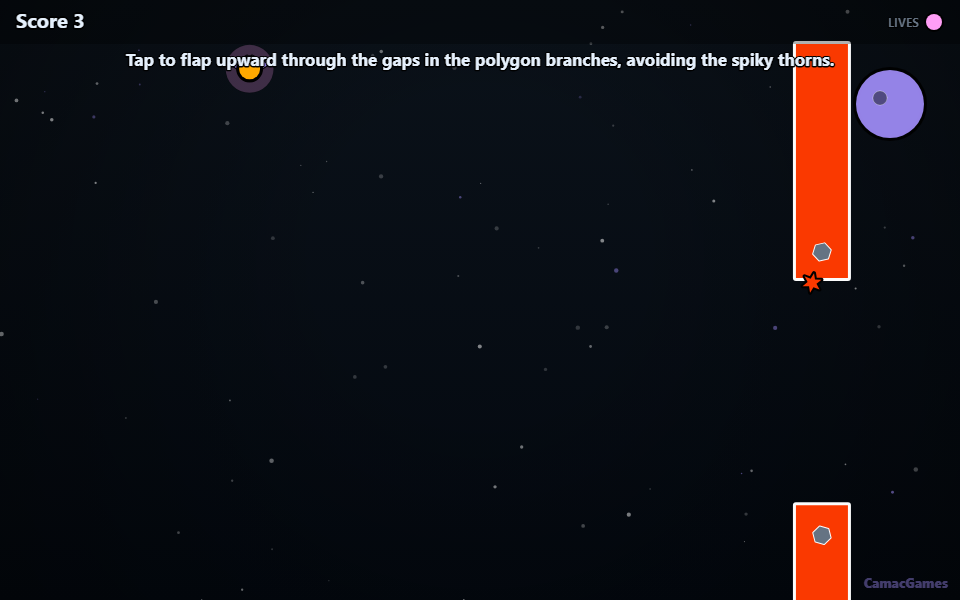
FAQ
How can I get a higher score in Lantern Moth?
To achieve a high score, focus on precise timing and mastering the movement patterns of the obstacles.
Is Lantern Moth free to play?
Yes, Lantern Moth is completely free to play directly in your web browser without any downloads.
What is the best strategy for beginners?
Beginners should start by mastering basic navigation and learning the rhythm of the game's environment.